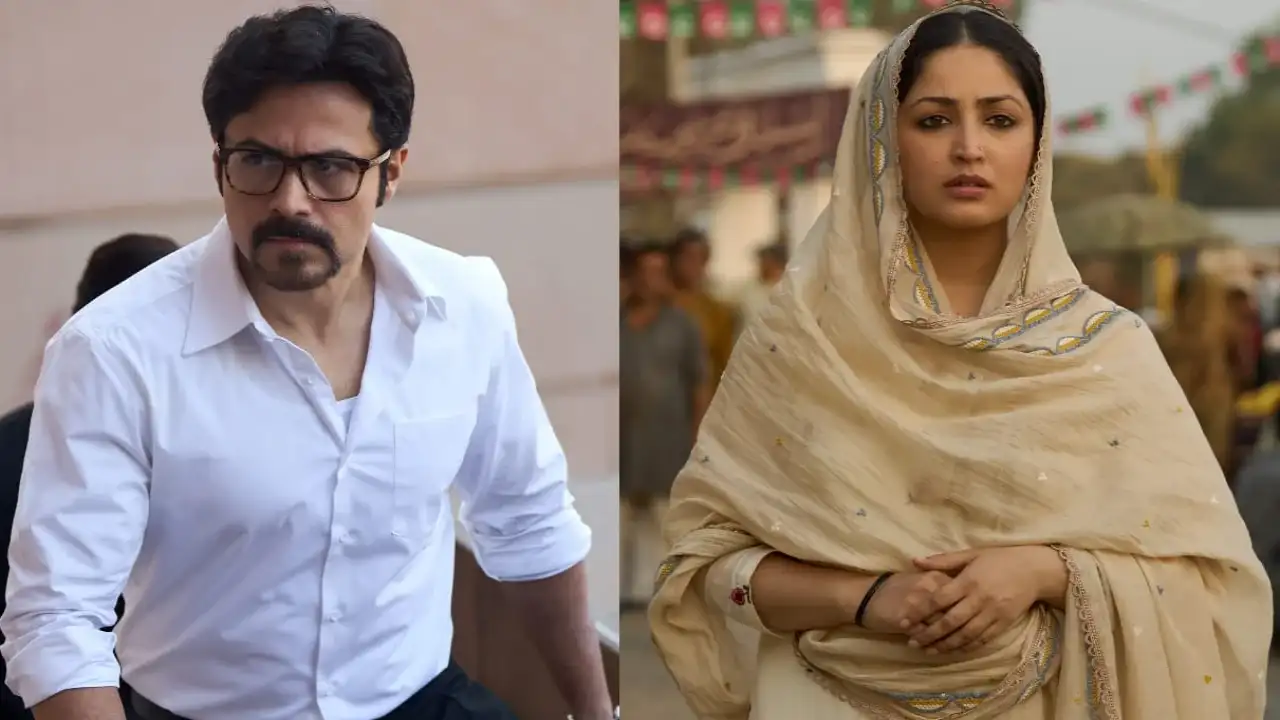
Name: HAQ
Director: Suparn Varma
Cast: Emraan Hashmi, Yami Gautam, Sheeba Chadha, Aseem Hattangady, Vartika Singh
Writer: Reshu Nath
Rating: 3.5/5
By MasalaBuzz Film Desk
Suparn Varma’s HAQ draws inspiration from the real-life Shah Bano case and former journalist Jigna Vora’s book Bano: Bharat Ki Beti. Set across the late 1970s and 1980s, the 136-minute courtroom drama follows Yami Gautam as Shazia Bano, a woman abandoned through triple talaq and left fighting not only for maintenance and dignity, but for her identity within a system stacked against her.
Her husband, Abbas Khan—played by Emraan Hashmi—is a respected lawyer who uses the same law to silence her. What unfolds is Shazia’s determined battle against patriarchal structures, community pressures, and the legal restrictions imposed under personal laws. Whether she wins or is drowned out by societal noise forms the emotional anchor of HAQ.
Plot Summary
After being divorced through triple talaq, Shazia refuses to fade into the margins. She takes her husband and the system head-on, challenging laws that deny women a voice. Her fight becomes one for herself and for countless women whose stories remain unheard.
The film examines whether one woman’s courage can shift the tide of injustice.
What Works
Strong Writing and Sharp Dialogues
Reshu Nath’s writing is tight, layered, and emotionally resonant. The dialogues cut deep without slipping into melodrama.
Authentic Period Detailing
The film’s production design—ranging from 70s-80s interiors to textured props like chunri-printed wedding wrappers and metallic suitcases—grounds the story in its era.
Emotionally Impactful Scenes
Though the soundtrack is subtle, the background score heightens key emotional moments. Several scenes land with unexpected force, especially in the first half, which is the film’s strongest stretch.
Confident Direction
Suparn Varma successfully maintains tension without overwhelming the narrative, ensuring the audience stays invested in Shazia’s journey.
What Doesn’t Work
Community Backlash Could’ve Been More Powerful
While the film addresses social outrage and pressure, these moments feel somewhat muted compared to the intensity of Shazia’s personal struggle.
Mid-Section Pacing Issues
The second half slows down before regaining momentum in the final act. A few story beats feel predictable, and some emotional arcs deserved more development.
Performances
Yami Gautam as Shazia Bano
Yami Gautam delivers one of her most compelling performances. She embodies Shazia’s pain, resistance, and resilience with striking authenticity. Her restrained expressions, Arabic diction, and emotional vulnerability elevate the film.
Emraan Hashmi as Abbas Khan
Emraan Hashmi excels in a complex role, portraying controlled aggression with depth. Despite the strained dynamic, his scenes with Yami carry undeniable screen chemistry, making their confrontations gripping.
Sheeba Chadha as Bela Jain
Sheeba Chadha brings quiet strength and precision to her role as Shazia’s lawyer. Every line she delivers lands with purpose.
Supporting Cast
Vartika Singh as Saira and Aseem Hattangady as Shazia’s father contribute meaningfully, offering emotional weight to the narrative.
Final Verdict
“Jab koi aapki aawaaz na sune, to dard hota hai.”
This line, spoken by Yami Gautam’s character, captures the very soul of HAQ.
More than a legal drama, the film is a moving exploration of a woman’s right to dignity, equality, and her own voice. It is a reminder that these battles cut across faith, caste, and community—rights are universal, and silence is never the answer.
HAQ is a sincere, emotionally charged film driven by powerful performances. Whether you are drawn to courtroom dramas or stories of resistance, this one is worth watching. As the film subtly states: cinema—and justice—belong to everyone.